Noninvasive Medical Imaging

Track disease progression and assess therapeutic efficacy over time within the same subject using noninvasive medical imaging/noninvasive in vivo imaging. With on-site MRI and advanced imaging infrastructure at Hamamatsu University School of Medicine, we deliver high-resolution, longitudinal data while minimizing subject burden and eliminating the need for invasive procedures.

Imaging Support for Drug Discovery 

Our main focus is to support drug discovery with image diagnostic technology. We utilize the latest image evaluation techniques to develop specialized disease models and analyze pharmacokinetics, supporting each stage of development from preclinical to clinical trials.

Noninvasive Medical Imaging Solution Features:

From the preclinical research stage, we utilize clinical equipment such as PET (positron emission tomography), SPECT (single-photon emission computed tomography), CT (computed tomography), and MRI (magnetic resonance imaging) to expand our imaging diagnostic technology across a wide range of animal species, from rodents such as mice and rats to rabbits and non-human primates (mainly cynomolgus monkeys). This allows us to efficiently support the development of new drugs using disease models that make it easier to predict clinical effects in fields such as the central nervous system, ophthalmology, and cardiovascular medicine. We also evaluate medical devices.

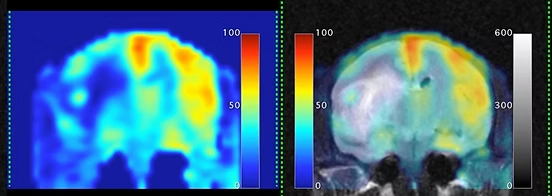
By tracking the temporal changes in the disease state using image evaluation, we can perform not only morphological evaluations but also functional evaluations such as ASL (Arterial Spin Labeling) to assess cerebral blood flow and fMRI (Functional Magnetic Resonance Imaging) to image brain activity. In non-clinical trials, we use the same biomarkers as in human clinical trials to enhance extrapolation to clinical applications. We can also evaluate the temporal changes in the disease state using biomarkers measured from various images. In the stroke model, in addition to evaluating stroke volume using DWI (Diffusion Weighted Imaging), we can evaluate cerebral ischemia using ASL. Furthermore, in the pain model, in addition to behavioral evaluations, we can incorporate objective pain evaluation using fMRI into the trial. Based on the customer’s needs, we will propose a trial plan that incorporates image evaluation measurements.

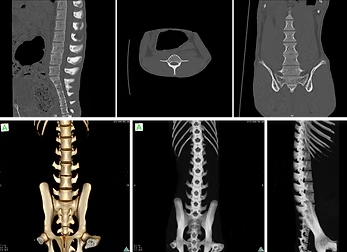
We have extensive experience in a wide range of analytical fields, including quantitative analysis of cerebral infarction using fMRI, evaluation of cardiac function and renal blood flow, and CT evaluation of intervertebral disc degeneration and bone density. We have many analysts on staff, enabling us to process numerous image analyses simultaneously, and we can also perform behavioral assessments and various MRI-based evaluations. Furthermore, we possess high technical skills in MRI-guided puncture and administration, and can flexibly handle analyses we have no prior experience with, depending on the content.

In addition to our own imaging equipment, we also collaborate with the imaging centers of Hamamatsu University School of Medicine and Hamamatsu Photonics K.K. to perform analyses using the latest diagnostic imaging equipment.

Leveraging image analysis technology highly praised by many clients, we have accumulated extensive experience in clinical analysis of human subjects. Our team, with ample experience in developing clinical imaging and dynamic image analysis methods, as well as research expertise, will propose the optimal study design.

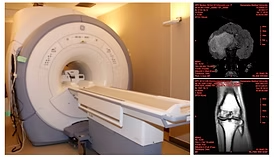
MRI

  • Signa Explorer 1.5T (On-site)
  • Signa HDxt 3.0T (Off-site)

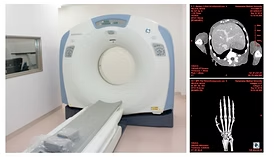
X-ray CT Scanner

  • Bright Speed Elite SD

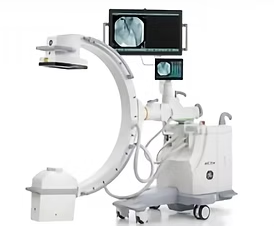
C-arm Fluoroscope

  • OEC one CFO 21 PMC

Skeletal Imaging with X-ray CT
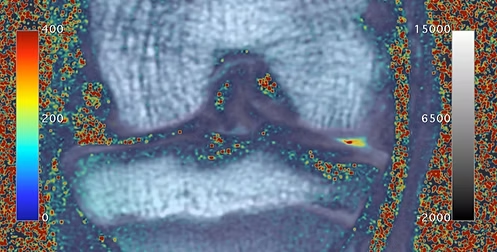
Cartilage Volumetry MRI
Brain Activation with fMRI
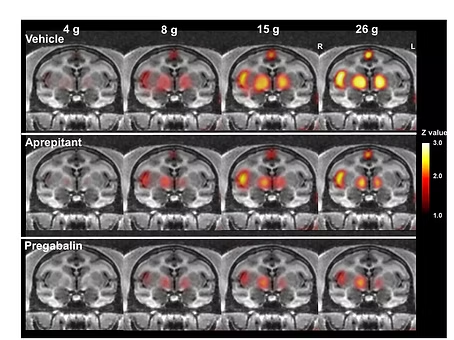
Brain activation with fMRI

Cyst Volumetry MRI
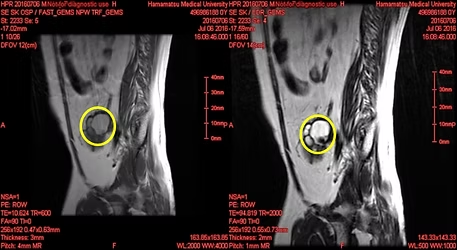
MRI Brain Infarction Volume Over Time

MRI Brain infarction volume over time

Cerebral Blood Flow Perfusion MRI

Cerebral blood flow perfusion MRI

Funduscopic and OCT Retinal Examination
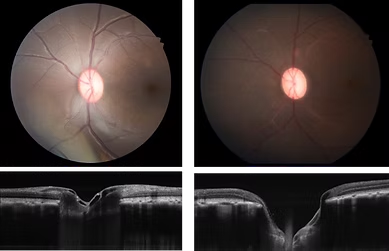
Funduscopic and OCT retinal examination

Normal                                         Glaucoma

Diffusion Tensor Imaging for Visualizing Optic Nerve Damage
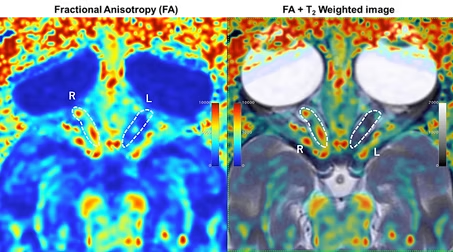
Diffusion tensor imaging for visualizing optic nerve damage

(R)ight = Normal, (L)eft = Glaucoma

Cell & Gene Therapy

Advance Your Research with Noninvasive Medical Imaging

Connect with our team to explore how our on-site MRI and imaging capabilities can support your study goals.